

Why SaaS Companies Should Run a BFCM Offer

Tired of nonsense pricing of DocuSign?
Start taking digital signatures with BoloSign and save money.
Every SaaS founder eventually comes face-to-face with a recurring dilemma. As Black Friday and Cyber Monday approach, the world around them erupts with offers, promotions, countdowns, “best deal of the year” banners, and emails that hit inboxes with military precision. Retail companies go aggressive. D2C brands spend months preparing. Consumer apps gear up for spikes in downloads. And almost every digital product on the internet aligns itself to ride this collective wave of purchasing energy.
Meanwhile, founders of SaaS companies often hesitate. They hang back. They wonder whether participating in BFCM might make their product look cheap. They question whether discounts dilute their perceived value. They worry that they might attract the wrong customers or set the wrong expectations. They debate whether a serious product meant for businesses should be playing in the same psychological playground as shopping carts full of shoes, phones, and kitchen appliances.
These are real concerns. Founders are not wrong to think about them. But when you peel back the layers and study the actual behavior of SaaS buyers, the internal budgeting cycles inside companies, the psychology of decision making, and the timing of when people feel comfortable spending money, a different truth emerges. BFCM is not just relevant for SaaS companies. It is one of the most powerful revenue accelerators a SaaS company can tap into, and the reluctance to participate often comes from misunderstanding what BFCM truly represents.
BFCM is no longer a retail event. It has evolved into a psychological moment. A global shift in buyer mindset. A rare alignment of intention, willingness, and timing. And for SaaS founders who understand this, the period between late November and early December becomes the single most efficient window of the entire year.
Let’s start at the most fundamental layer.
Buyers behave differently during BFCM because their brains shift into “decision mode.”
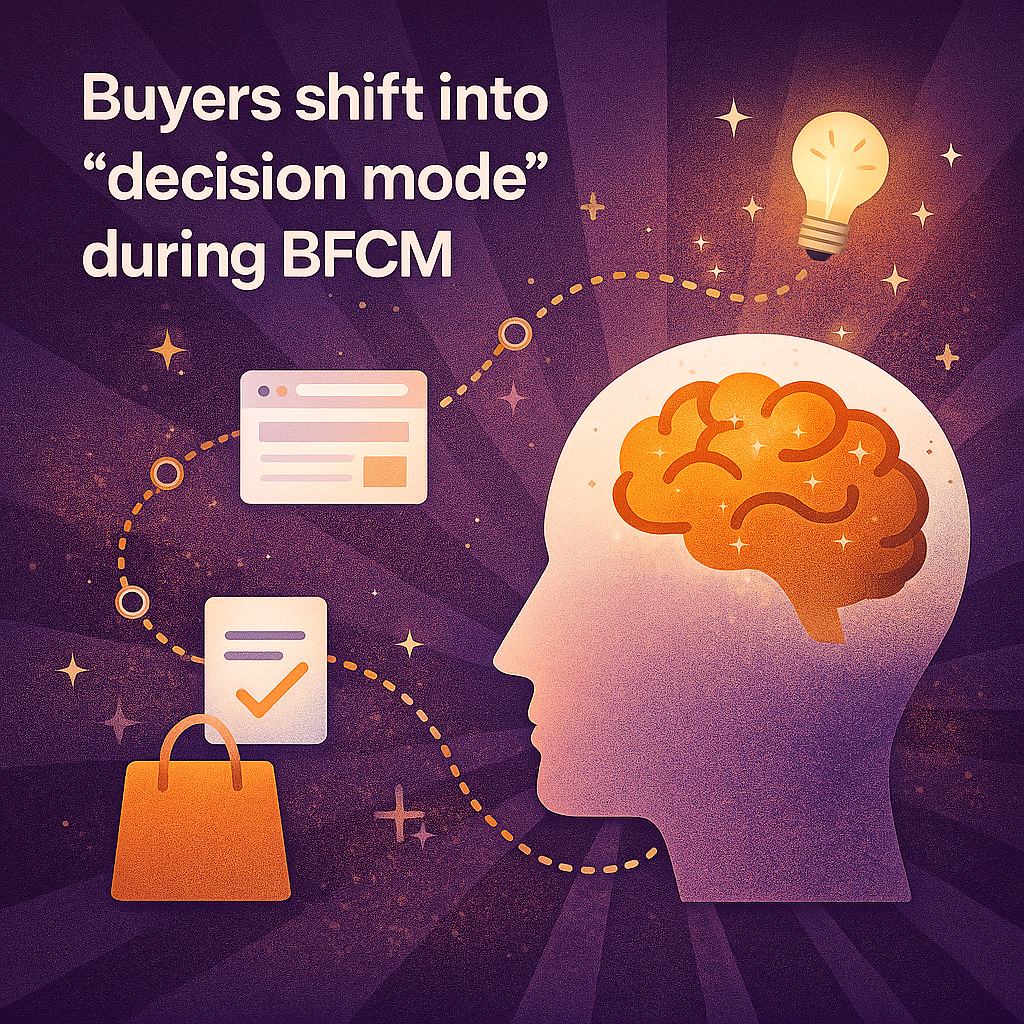
Human beings do not make decisions in a vacuum. They make decisions in contexts and moments. The same person who hesitates to buy a SaaS plan in April will happily pay for an annual subscription in November. It has nothing to do with the product itself. It has everything to do with the psychological permission BFCM creates.
For most of the year, spending money comes with guilt, caution, internal friction, and the fear of committing to something prematurely. But during BFCM, the emotional resistance drops dramatically. People expect to spend. They wait for this moment. They justify purchases more easily because they believe they are making smart financial choices. The external environment rewards action rather than caution.
This mindset shift is powerful because it reduces the cognitive load involved in a SaaS decision. Most SaaS purchases die because buyers “need more time to think.” BFCM eliminates the need for prolonged thinking. Buyers enter the week believing, “This is the moment when I finally buy the tools I’ve been postponing.” And because everyone else is also spending, the act of purchasing becomes socially reinforced.
This is why platforms like AppSumo consistently see massive spikes in conversions even though their traffic during BFCM only grows slightly. People don’t suddenly discover new needs. They simply feel empowered to take action on the needs they already knew they had.
Most SaaS founders underestimate this shift. They assume discounts are what change behavior. But timing is what truly changes behavior. BFCM aligns the buyer with the decision they were already leaning toward, and this shift alone collapses months of hesitation into a single moment.
Inside companies, budgets expire in December. This turns BFCM into the easiest approval window of the entire year.
When you look inside a company, especially a company using your SaaS product, something interesting happens in November. Departments start feeling pressure to use their existing budgets before the year ends. This “use it or lose it” cycle is not something they control. It is built into the financial structure of the organization.
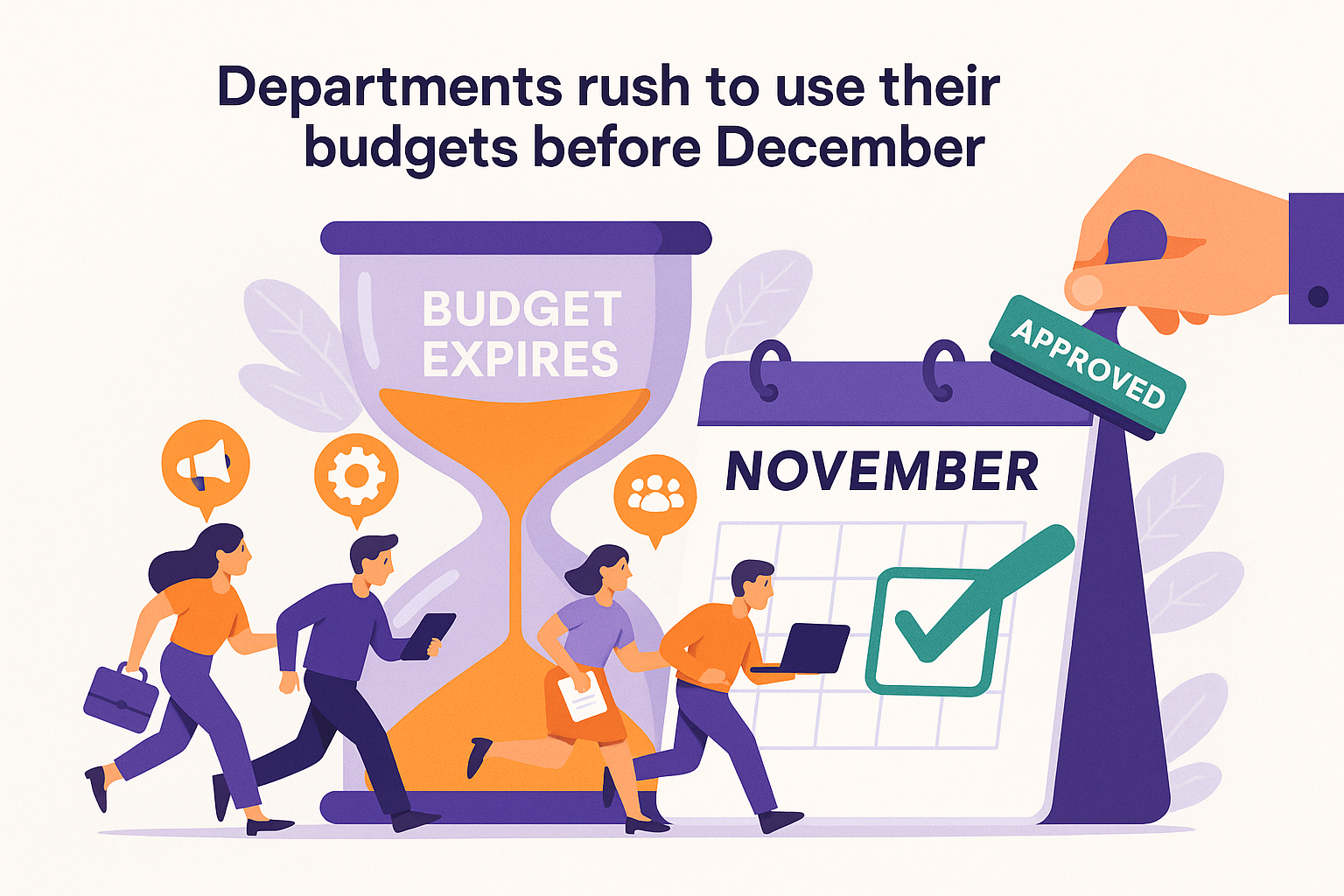
Marketing teams rush to secure tools they know they’ll need next year. Operations teams look for software that can streamline processes. HR teams lock in digital tools that support hiring or onboarding. IT teams upgrade security and infrastructure. The final quarter becomes a race to validate budget utilization, not avoid spending.
This internal pressure makes BFCM the perfect justification. A team can walk into a meeting and say, “We bought this now because the annual plan was discounted, and it aligns with our budget cycle.” This creates less friction, less negotiation, less scrutiny, and faster approval.
This is why companies like Notion specifically target warm leads during BFCM. They know these leads already believe in the product. They know the only thing missing is timing. They know internal budgets suddenly open up. BFCM becomes the excuse buyers need to shortcut internal processes.
And here is the key insight: SaaS founders are not “teaching users to wait for discounts.” They are tapping into a period when budget availability, emotional readiness, and rational justification are at their peak.
Annual plans become easier to sell because buyers feel they are making a smart, long-term choice
Selling annual plans is difficult in regular months. Buyers worry about commitment. They worry about whether they will still need the product one year from now. They worry about the upfront payment. They worry about risk.
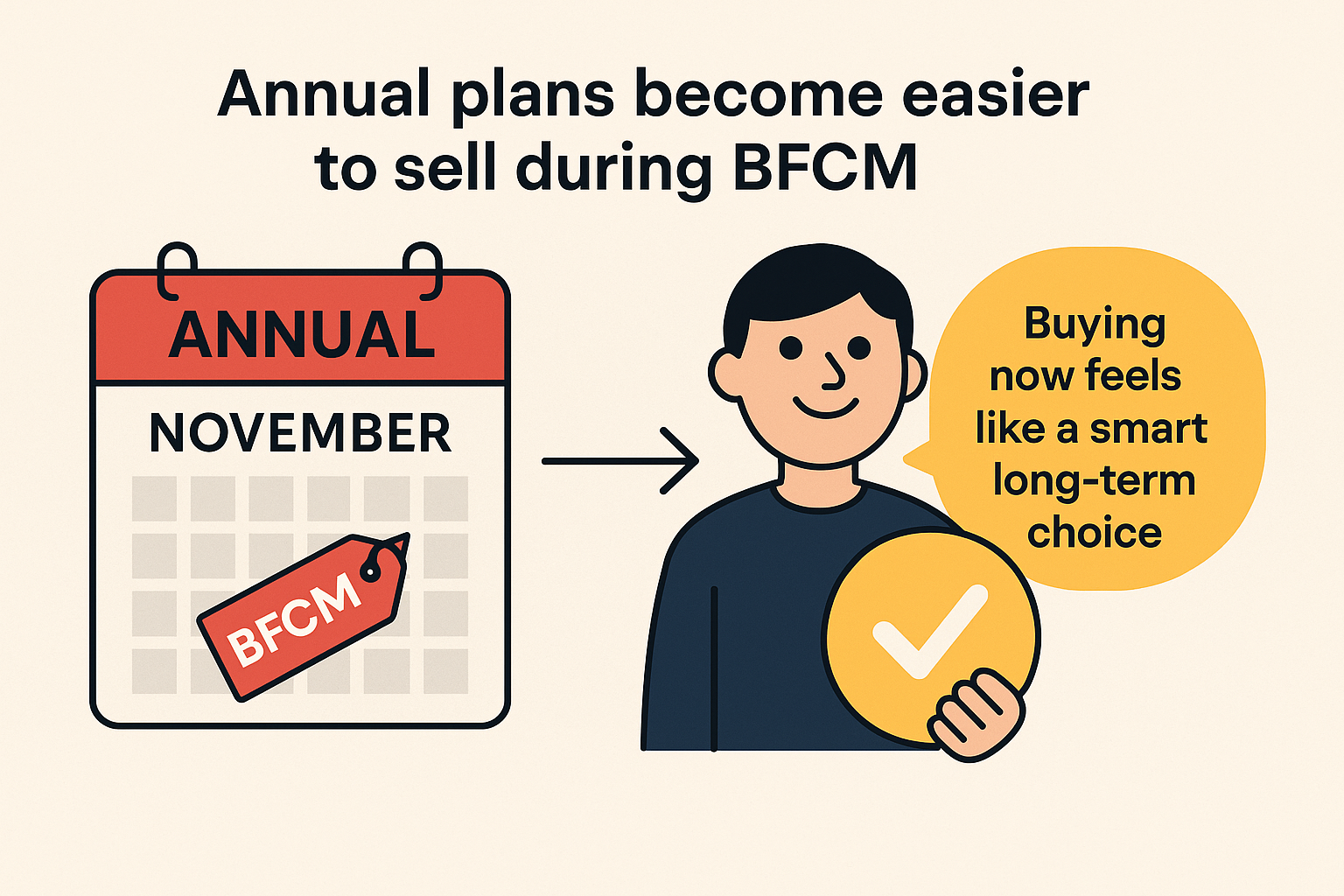
During BFCM, these concerns fade for a simple reason. Buyers mentally categorize BFCM decisions as smart long-term savings rather than commitments. They think, “If I know I’ll eventually use this, I might as well secure it now at the best possible price.” This mindset transforms annual plans from a psychological burden into a psychological win.
This is why companies like Figma see spikes in annual plan upgrades during the holiday period every year. Even when Figma makes no major updates, users feel comfortable locking in long-term access because the timing validates the decision.
Founders must understand that people do not buy annual plans logically. They buy them emotionally, when the timing feels right, and BFCM is the only time of the year when the emotional and rational layers align perfectly.
The competitive landscape shifts radically during BFCM
Even if you choose not to run a BFCM offer, your competitors will. And this matters more than founders realize. Buyers compare tools more during BFCM than any other period of the year. They open more tabs. They search more pricing pages. They look for differences. They look for perceived value.
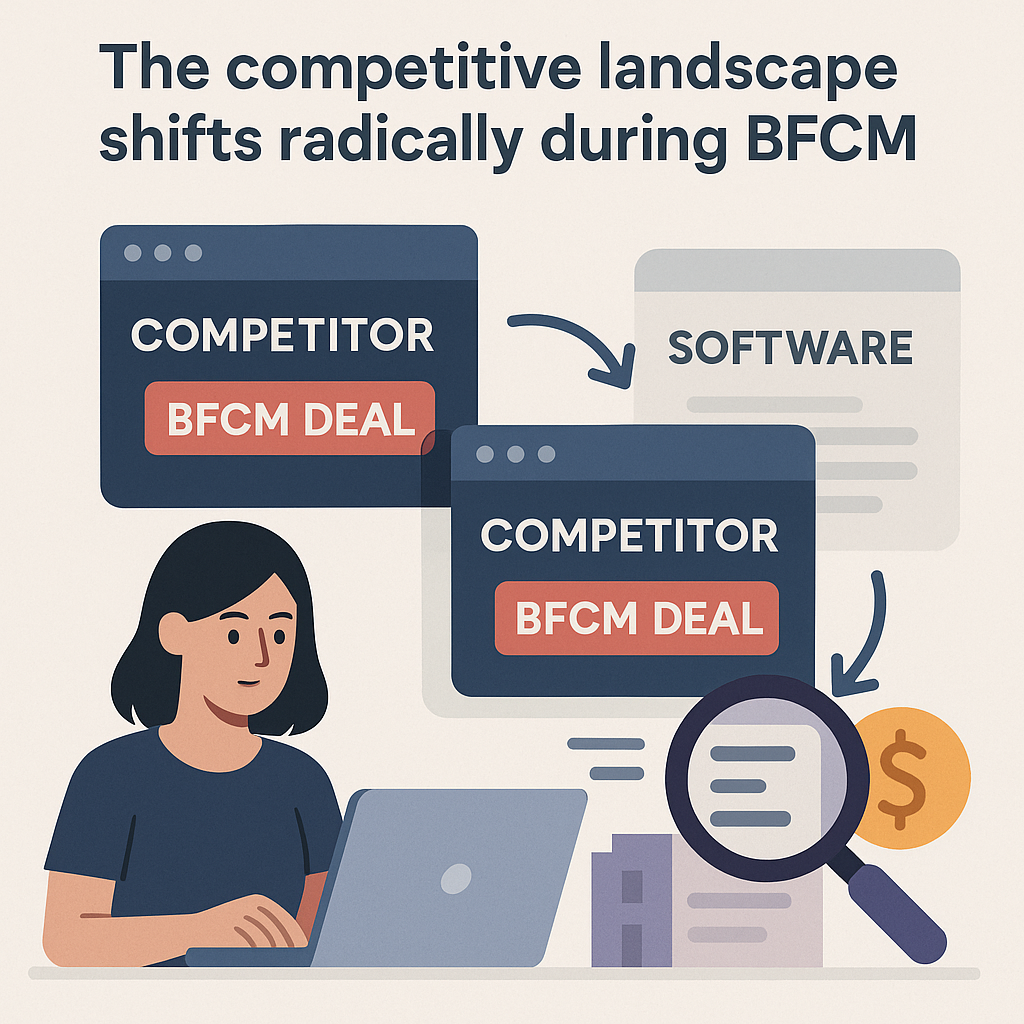
If they see two of your competitors offering compelling annual deals, and you are completely silent, you don’t appear premium. You appear absent. The buyer assumes you are either more expensive, less confident, or less aligned with their moment of evaluation. They might still believe your product is good, but psychologically, they move toward the tools that show up for them when they are ready.
The clearest example of this happened when Jasper remained passive during BFCM while Writesonic aggressively ran promotions. Writesonic gained thousands of users because it captured the moment buyers were ready to switch or upgrade. Jasper’s brand strength did not matter. Only timing did.
BFCM is not a price war. It is a visibility war. And invisibility is the most expensive position in SaaS.
Acquisition costs drop because user intent accelerates conversion speed
One of the biggest misunderstandings about BFCM is the idea that acquiring customers becomes more expensive because retail brands flood the ad platforms. CPMs do rise, but SaaS companies operate in a different reality. Your true CAC is shaped far more by conversion speed than by the sticker price of a click. And during BFCM, something very useful happens. People convert faster. The gap between clicking an ad and making a purchase shrinks dramatically because buyers come into November already prepared to make decisions. They don’t overthink. They don’t bounce around. They don’t wait for “next week.” They act.
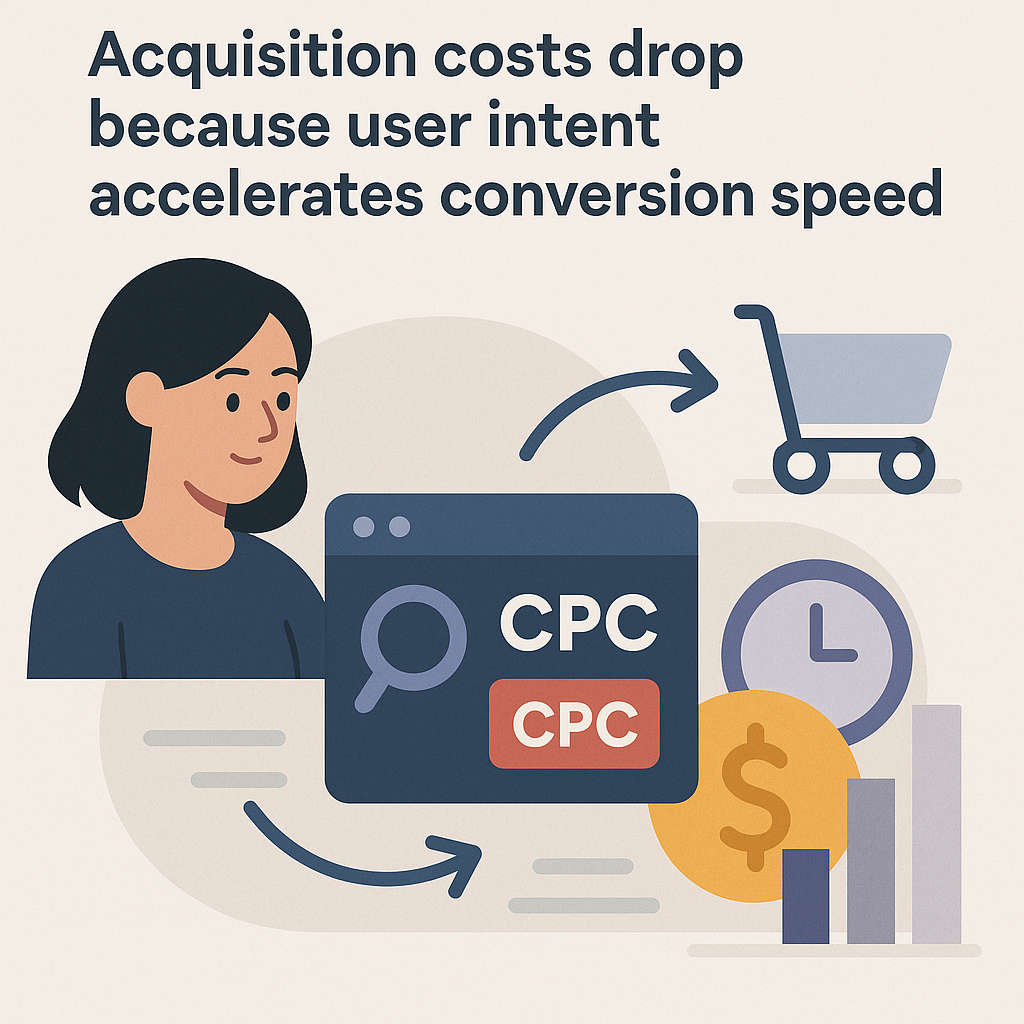
Platforms like Meta and Google Ads reward this behavior. When your ads generate fast, decisive conversions, the algorithm interprets your content as highly relevant and automatically lowers your effective cost. The result is counterintuitive but proven: you end up paying less to acquire a customer during BFCM even if each impression technically costs more.
This isn’t theoretical. Companies like Canva have shared how their customer acquisition costs dropped sharply during the BFCM window because users who clicked their ads converted almost immediately. Canva didn’t change its ads. The buyers changed their timing and intent.
That’s the deeper insight SaaS founders often miss. CAC is not just about what you pay to run a campaign. CAC is about how quickly someone decides after seeing it. And BFCM is the only period in the entire year where this decision cycle compresses naturally, consistently, and at scale.
Warm leads return because BFCM gives them the exact justification they were hoping for
If you run a SaaS product, you know the frustration of warm leads. People who signed up for a trial, explored your dashboard, played with features, maybe even invited a teammate, and then disappeared. They didn’t leave because the product was bad. They left because the timing wasn’t right. Life got busy. Budgets weren’t approved. Priorities shifted.
BFCM brings them back. It acts as a signal. It tells them, “If you ever wanted this, now is the moment.” This is why companies like Loom observe massive boosts in returning free users during BFCM. These users don’t need onboarding. They don’t need education. They already know the product. They simply needed an emotional reason to complete the decision.
Every SaaS company is sitting on silent revenue inside their warm lead base. BFCM is the most efficient way to unlock it.
BFCM users churn less because they enter with intention, not experimentation
Founders often fear that discount buyers will churn quickly. The truth is the opposite. BFCM buyers churn less because they upgrade intentionally. These users were already evaluating your product. They already liked what they saw. They already recognized the value. The offer simply accelerates the moment of commitment.
These are not bargain hunters. These are pragmatic buyers. They are not chasing a deal. They are using the deal to justify a decision they already believed in. This makes them more committed, more engaged, and more likely to expand usage.
The best SaaS users often enter during moments of clarity. BFCM creates that clarity.
The entire quarter compresses into one weekend for SaaS
When founders talk about BFCM revenue spikes, they often mistake it for a one-off spike. But the real power of BFCM lies in how it shifts the revenue curve for the next year. When you acquire more annual users, your base for renewals expands. When your CAC drops, you improve margins going into Q1. When warm leads convert, your overall funnel becomes healthier. When team accounts upgrade, your per-user revenue multiplies.
This is why many SaaS businesses report that BFCM activates pipelines that would normally take three months of nurturing. In one weekend, you achieve what normally requires constant follow-up, sales calls, reminders, and internal approvals.
BFCM aligns the world in a way no other time does.
Now let’s talk about BoloSign
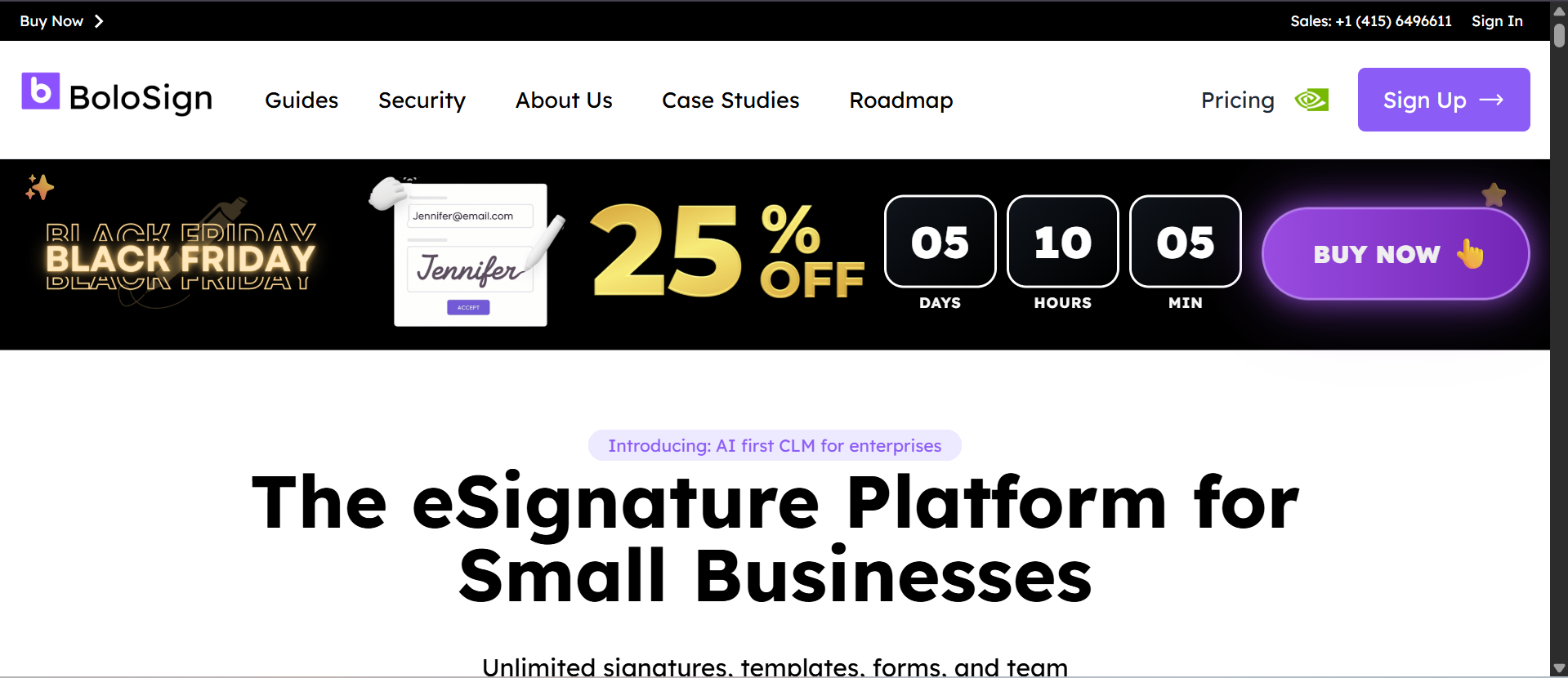
Everything in this article becomes real when you look at how BoloSign behaves during BFCM. Nothing dramatic changes inside the product during that window. There are no surprise feature launches. No sudden redesigns. No pricing experiments. The product remains exactly what it was the week before. What does change is the mindset of the people who already know BoloSign exists.
Warm leads who signed up months earlier quietly come back. They log in again. They reopen documents. They rebuild workflows. They explore templates they once ignored. These aren’t cold prospects stumbling in by accident. These are users who already liked the product but never found the perfect moment to upgrade. BFCM becomes that moment.
The offer doesn’t force a decision. It simply aligns with what they already wanted. Instead of viewing the subscription as a recurring cost, buyers now see it as a smart annual move. They compare BoloSign against tools like DocuSign, HelloSign, and PandaDoc. And the contrast becomes impossible to ignore. The unlimited usage, the simplicity, and the price difference make the choice feel almost obvious. What felt like “maybe later” in September becomes “this makes perfect sense right now” in November.
You can see the impact everywhere. Annual plan adoption jumps without any extra persuasion. CAC drops because people convert faster and require almost no back-and-forth. Users who linger on the free plan activate features they previously skipped. Undecided teams finally move forward because the offer fits neatly into their budget cycle. None of this momentum is tied to new functionality. It happens because BoloSign shows up during the exact psychological window where buyers are ready to commit.
And that’s the deeper lesson founders miss. Features matter, but timing matters more. When you meet buyers at the moment they are ready, everything else flows naturally
Case Study 1: How Notion Turned a Dormant Pipeline Into Instant Revenue
Notion is a great example of a SaaS company that understands timing better than most. Every year, Notion quietly sends targeted BFCM offers to teams already sitting in their pipeline. These aren’t cold prospects. They’re companies that tested the workspace, built a few pages, maybe collaborated with a colleague, but never upgraded. For most of the year, these leads stay warm but inactive because internal approvals move slowly and competing priorities get in the way.
During BFCM, the situation flips completely. These same teams now have leftover budgets they need to use before the year ends. Approvals become easier. Decision cycles shrink. Notion’s offer lands at the perfect time, and deals that had been stalled for months suddenly close with almost no friction. Entire departments upgrade to annual plans because it feels like the smartest financial move they can make. In a single weekend, Notion converts enough dormant pipeline to match what might otherwise take them an entire quarter. Nothing magical happens on the product side. Only the timing changes.
What founders can learn:
Warm leads don’t lack interest. They lack the right moment. BFCM gives them that moment.
Case Study 2: How AppSumo Tripled Conversions Without Tripling Traffic
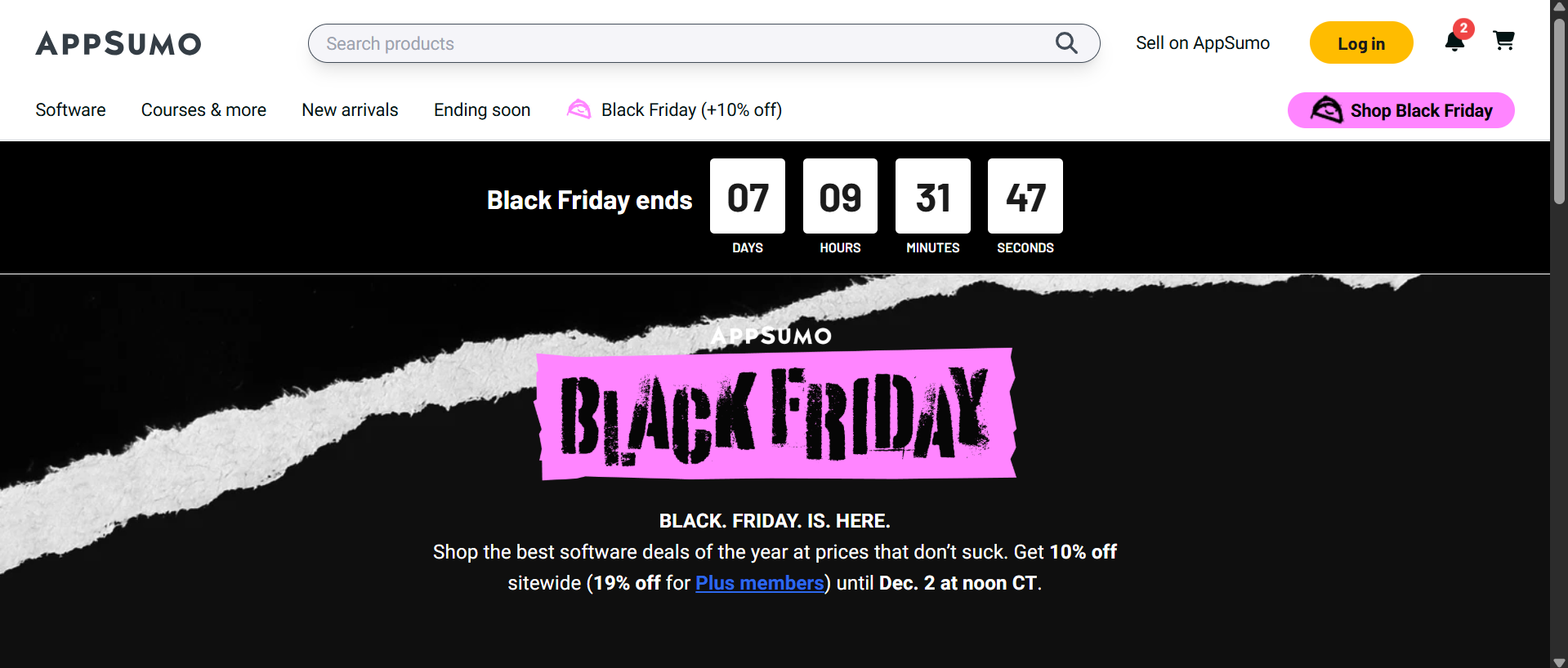
Every year, AppSumo becomes a real-time laboratory for observing SaaS buyer psychology. Their traffic during BFCM doesn’t explode. It grows a little, but nowhere close to the massive jump people assume. Yet conversions skyrocket. AppSumo often sees close to three times the usual conversion rate during the BFCM window, not because more people are browsing but because the same people arrive ready to spend.
Buyers who usually hesitate—wondering if they should wait, evaluate more tools, or stretch their budgets—suddenly act decisively. They purchase higher tiers. They grab lifetime deals. They try new tools instead of bookmarking them “for later.” The desire to make smart financial decisions during BFCM removes psychological barriers that normally slow SaaS purchases. AppSumo benefits from this shift more than almost any platform in the industry because its entire marketplace is built around intention-driven software buying.
What founders can learn:
You don’t need more traffic during BFCM. You need to be present when buyers arrive with higher intent.
Case Study 3: How Canva Lowered CAC in the Most Competitive Ad Week of the Year
At first glance, you’d assume BFCM would be the worst time for SaaS companies to run paid campaigns. Retail brands dominate ad inventory. CPMs spike. Competition peaks. But the opposite happened for Canva. Their marketing team has shared that during BFCM, their CAC actually dropped, even though the cost per impression increased.
The reason is simple. Conversion speed soared. People who clicked Canva’s ads in November converted almost instantly because they were already in buying mode. The faster someone converts, the more ad platforms like Meta and Google Ads reward the campaign with cheaper optimized placements. This meant Canva paid less per customer, even though every ad technically cost more to show.
This outcome highlights a deeper truth: in SaaS, CAC is not only about the cost of the click. It is about the time between “click” and “purchase,” and BFCM is the only period where that gap consistently collapses.
What founders can learn:
BFCM improves your CAC not because ads get cheaper, but because buyers convert faster than any other time of year.
The real cost of skipping BFCM is not what you think
A lot of SaaS founders skip Black Friday and Cyber Monday because they believe staying silent protects their brand. They think avoiding discounts makes them look premium or positioned above seasonal buying cycles. On the surface, that logic feels safe. But when you actually study how SaaS revenue compounds, skipping BFCM creates a ripple effect that quietly hurts your business for the next twelve months. The real damage isn’t the revenue you miss during that one weekend. It’s the downstream loss that keeps showing up month after month in places most founders never trace back to BFCM.
When you stay out of BFCM, your warm leads don’t just sit idle. They convert on competitor tools that did show up during the exact moment they were mentally ready to buy. Once they commit, they are locked in for a year, maybe longer, which means you don’t just lose a sale. You lose an entire customer lifecycle. Your annual plan adoption stays lower than it should be, which affects your cash flow, your renewal base, and the stability of your revenue. Your CAC stays higher because the fastest-converting week of the year passed without you participating. Your pipeline slows down because the psychological momentum BFCM creates was never given a chance to lift stalled deals. Your competitors gain visibility, take market share, and ride a wave of momentum that you never countered. And when Q1 arrives, you start the year with fewer annual commitments, fewer prepaid accounts, and a smaller revenue foundation to build on.
Skipping BFCM isn’t neutral. It’s a strategic disadvantage that compounds quietly across the next four quarters. The cost is far higher than one missed weekend. It shows up in every metric that matters: conversions, CAC, MRR, ARR, renewal base, and competitive positioning. SaaS companies don’t lose because they participate in BFCM. They lose because they choose not to.
The final truth
Running a BFCM campaign as a SaaS company isn’t about chasing discounts. It’s about aligning with the moment when buyers are emotionally open, financially prepared, and organizationally approved to make decisions.
It’s the one moment in the entire calendar when hesitation evaporates, budgets warm up, and the psychology of buying is universally primed. BFCM is the purest synchronization of intent, demand, urgency, and justification that exists in SaaS.
The most strategic founders understand this. They don’t see BFCM as a gimmick—they see it as alignment. They choose presence over silence. They choose timing over theory. Because in SaaS, growth rarely goes to the best product—it goes to the one that shows up when the buyer is ready.
And BFCM is the one time of year when every buyer is ready.

Paresh Deshmukh
Co-Founder, BoloForms
27 Nov, 2025
Take a Look at Our Featured Articles
These articles will guide you on how to simplify office work, boost your efficiency, and concentrate on expanding your business.